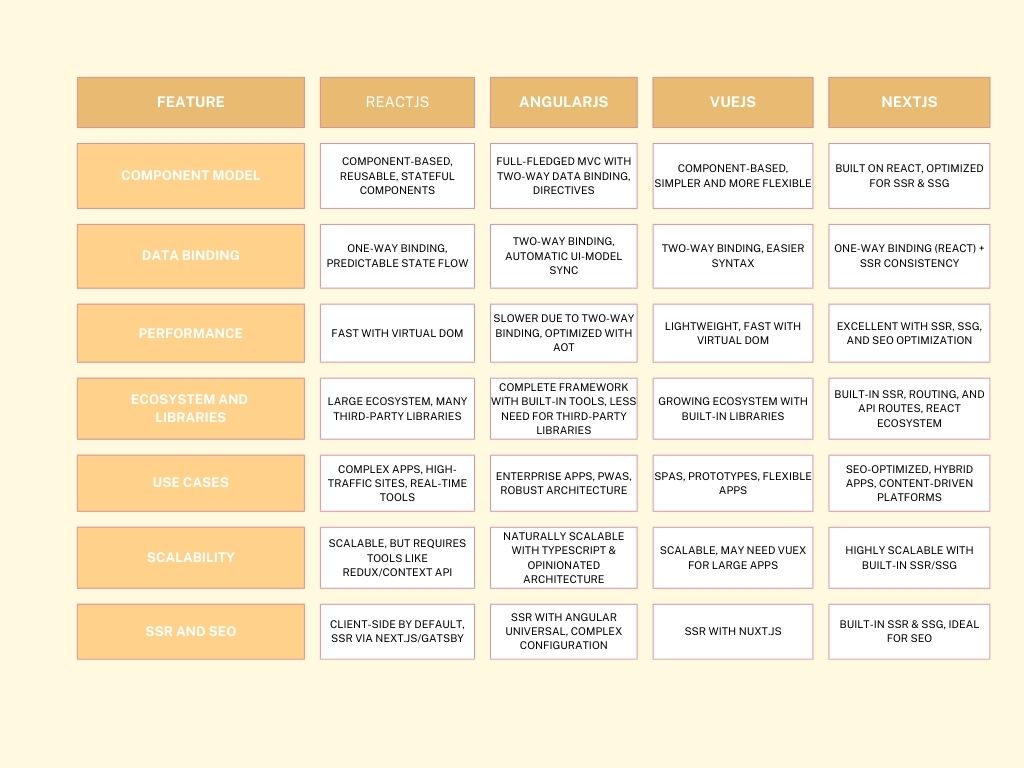
This article examines Vue.js and Next.js. Both frameworks offer flexibility and high performance. Vue.js suits rapid prototyping, lightweight applications, and integration into existing projects. Next.js provides SEO optimization and server-side rendering for content-heavy websites. This comparison outlines the strengths and use cases for both frameworks.
Previous articles reviewed the use cases and key features of React.js and Angular.
1. Vue.js: Lightweight and Flexible
Vue.js offers a low learning curve, suitable for small projects and rapid development. It merges React simplicity with Angular flexibility, enabling efficient construction of dynamic user interfaces.
Key Use Cases
- Prototyping and MVPs: Vue’s lightweight structure supports quick iteration. This suits startups and teams building Minimum Viable Products (MVPs). - Example: Many startups use Vue to test product concepts in early stages.
- Single-Page Applications (SPAs): Vue manages dynamic content and delivers smooth interactions without page reloads. - Example: Xiaomi’s website uses Vue for its SPA to manage product pages and handle user interactions.
- Interactive Dashboards: Vue’s reactive data binding and component architecture support dynamic, real-time dashboards. - Example: SaaS admin panels use Vue to display real-time data and visualizations.
- Progressive Integration with Legacy Systems: Vue supports incremental adoption. You can integrate it into existing codebases without a full rewrite. Example: Laravel apps often use Vue to add modern frontend functionality while retaining the backend.
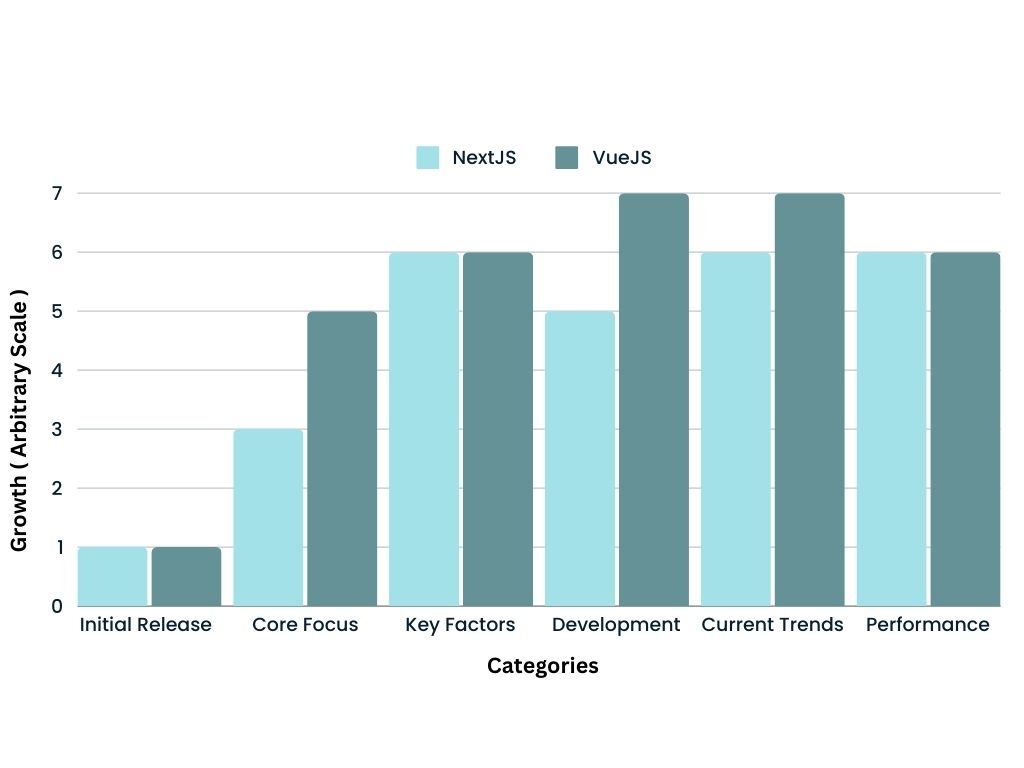
2. Next.js: Server-Side Rendering for Search Engine Optimization
Next.js extends the React component model. It adds server-side rendering (SSR) and static site generation (SSG). This makes it suitable for websites that require fast initial load times and search engine optimization.
Primary Use Cases
- SEO-Optimized Websites: Server-side rendering ensures search engines index content and users load pages faster. Example: Shopify uses Next.js to optimize storefronts. This improves product discoverability.
- Content-Driven Websites - Use Next.js for blogs, documentation platforms, and marketing sites. - Static site generation (SSG) improves performance and reduces server load. - Vercel uses Next.js for its documentation platform. - This setup ensures fast page loads and supports SEO.
- E-commerce Platforms - Select Next.js for e-commerce sites. - The framework combines server-side rendering for product pages with client-side interactivity. - This mix creates a seamless shopping experience. - Zalando uses Next.js to serve millions of users with high performance.
- Hybrid Applications - Use Next.js for applications with mixed static and dynamic content. - The framework supports both server-side rendering (SSR) and static site generation (SSG). - Twitch uses Next.js for this purpose. - It serves static assets and dynamically updates live streaming content.
- Large-Scale Marketing Sites - Companies using content marketing often select Next.js. - The framework pre-renders pages to improve SEO and load times. - Twitch and Netflix use Next.js for dynamic landing pages. - These pages support high-speed loading for large user bases. Conclusion - Vue.js suits lightweight, flexible applications. - Use Vue.js for rapid prototyping or integration with existing projects. - Its simplicity benefits smaller teams and startups requiring quick development. - Next.js suits SEO-focused, high-performance applications. - Use Next.js for content-driven websites and e-commerce platforms. - This choice leverages server-side rendering and static site generation.