
This section extends the previous analysis of Swarm Agent architecture to LlamaIndex. LlamaIndex provides a flexible workflow system. This system supports branching, looping, and nested workflows. It handles complex processes efficiently.
LlamaIndex Workflow Overview
LlamaIndex is an agent framework designed to build dynamic workflows. These workflows respond to user inputs and system conditions. The framework handles repetitive tasks and concurrent processes. It reduces development complexity.
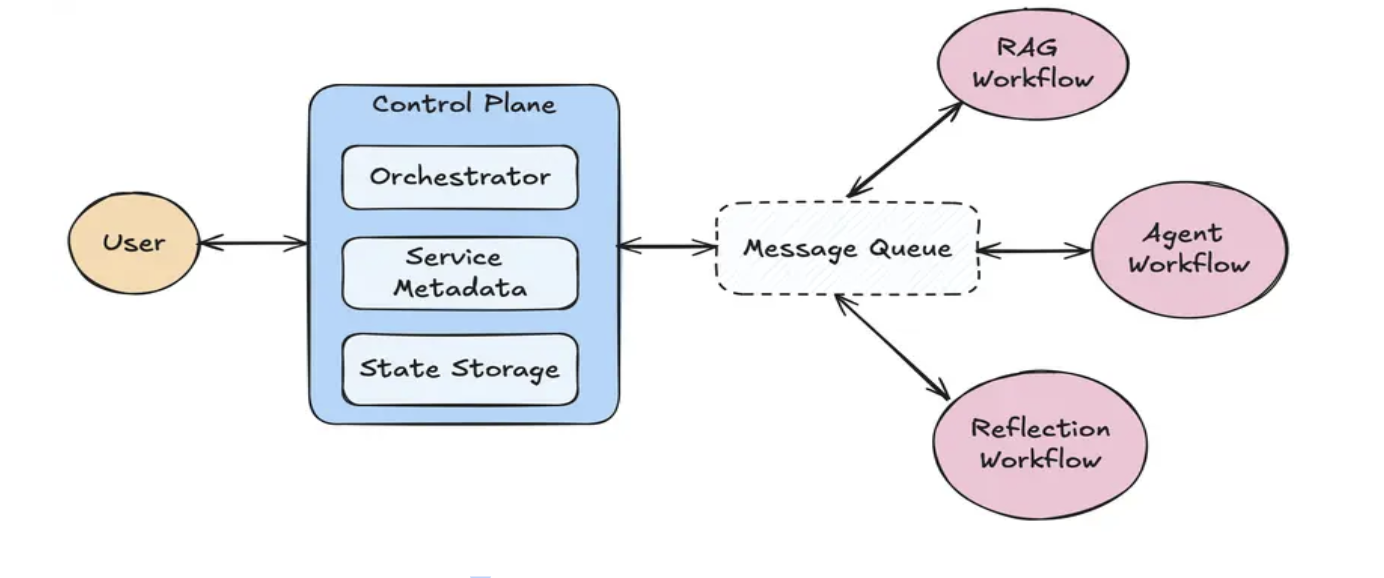
How a LlamaIndex Workflow Works
A workflow defines a sequence of steps containing conditional logic. This structure allows developers to build complex processes without managing low-level program state. LlamaIndex provides a standardized structure for customizing and extending these processes.
Benefits of LlamaIndex Workflows
LlamaIndex supports workflow architectures for diverse application requirements. Key capabilities include:
- Branching and Looping: Workflows execute different paths based on conditions. Specific steps repeat when defined logic requires iteration.
- State Management: The framework preserves state across steps. This ensures smooth transitions between events.
- Streaming Events: LlamaIndex supports event-driven architectures. Workflows respond in real time to streamed data or system conditions.
- Concurrent Execution: LlamaIndex allows parallel execution of multiple steps. This optimizes performance and speed for high-load applications.
- Subclassing Workflows: Developers can extend existing workflows. This adds new functionality without rebuilding the base structure.
- Nested Workflows: Developers can nest workflows to simplify complex processes. This creates modular components that improve reusability and management.
LlamaIndex provides these features. This article examines three core components: branching and loops, state management, and concurrent execution. These form the basis of complex workflows.
Branching and Loops
LlamaIndex processes branching and looping logic with high reliability. Most real-world workflows are non-linear. Branching directs workflow paths based on defined conditions. Looping repeats steps as required.
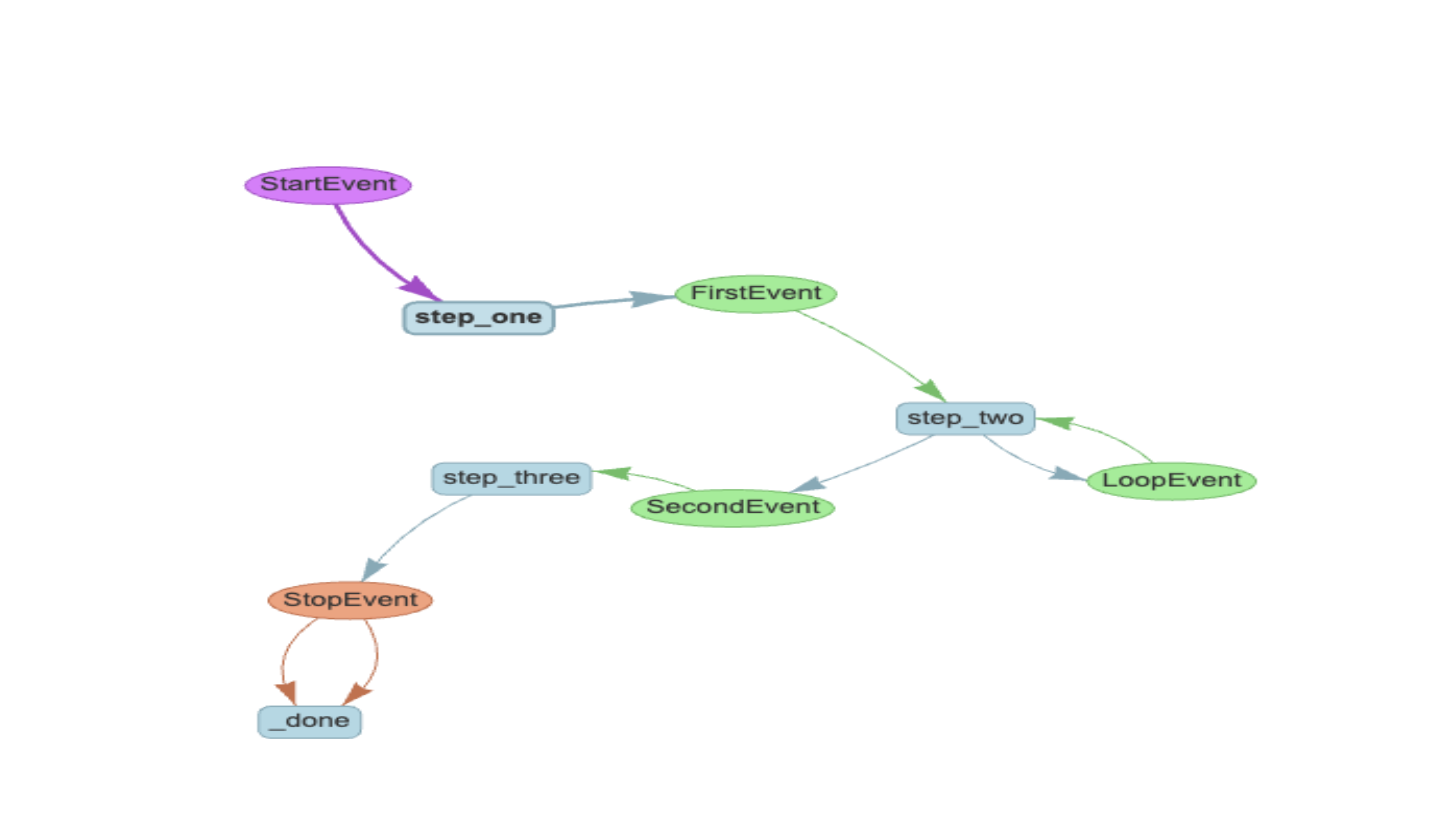
Figure 1.1: Loop Event Flow
Use Case Example
Consider an approval process. Depending on user input, the workflow progresses to the next step or loops back to request missing data. LlamaIndex simplifies this. Define custom logic to evaluate conditions. This logic determines the next step, whether to proceed or loop.
Conclusion
LlamaIndex provides a framework for adaptive workflows. Features include branching, loops, state management, streaming events, concurrency, and extensibility. Build applications that respond to user input and system conditions.
Use workflows in your next project. Expand application design capabilities.
Next, read how to extend a LlamaIndex workflow with subclassing, nesting and concurrency, and how the Autogen framework approaches multi-agent work.