
Introduction
Lean project management maximizes value and minimizes waste. It adapts Toyota’s manufacturing principles to project contexts. The method focuses on efficiency, continuous improvement, and customer satisfaction.
- Process or Product Improvement: Increases efficiency and outcomes by 50% to 60%.
- Timeliness: Remove bottlenecks and waste to accelerate delivery by 20–25%.
- Cost: Cut unnecessary spending by 20–25%.
- Customer: Align output with customer value to raise satisfaction by 30–40%.
- Team: Optimize resources and collaboration to increase productivity by 15–20%.
- Quality: Reduce defects to cut rework and errors by 20–30%.
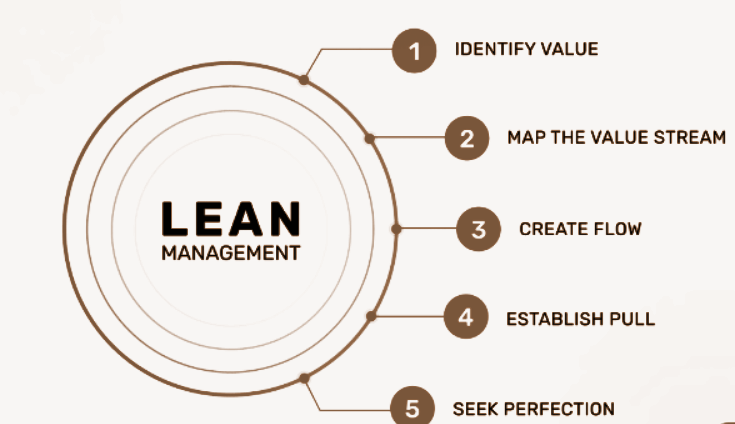
Lean Project Management Overview
Lean project management applies Lean principles to project execution. It delivers maximum customer value with minimal waste. Traditional methods prioritize deliverables. Lean focuses on efficient workflows and continuous improvement.
Core Lean Project Management Principles
Value Definition
Define value from the customer perspective. Align every task and deliverable with this value.
Map the value stream
Analyze the full workflow to identify waste. Locate delays, bottlenecks, and redundant steps.
Example: Remove unnecessary approval steps to cut cycle time.
Eliminate waste
Remove activities that add no value. Lean identifies seven waste types: overproduction, waiting, transportation, over-processing, excess inventory, motion, and defects.
Automate repetitive reporting tasks to free team capacity.
Flow Optimization
Ensure tasks move through the pipeline without interruption. Balance workload to prevent team overload.
Use Kanban boards to visualize task progress and identify bottlenecks.
Pull-Based Systems
Initiate work only when demand exists. This pull system prevents overproduction and matches deliverables to current needs.
Example: Begin feature development only after receiving a customer request.
Continuous Improvement (Kaizen)
Build a culture of regular process assessment. Teams identify improvement areas and apply incremental changes.
Example: Hold retrospective meetings after each project phase.
- Example: Develop features customers use daily, not optional add-ons.
Lean Tools and Techniques
Lean project management uses specific tools to improve efficiency and focus on value delivery:
- Kanban Boards: Visualize workflow and manage tasks.
- 5 Whys Technique: Ask "Why?" repeatedly to identify root causes.
- Value Stream Mapping (VSM): Map and optimize workflows.
- PDCA Cycle (Plan-Do-Check-Act): Framework for continuous improvement.
Benefits of Lean Project Management
- Customer-Centric Focus: Aligns output with customer requirements and expectations.
- Reduced Waste: Eliminates inefficiencies to save time, resources, and cost.
- Increased Productivity: Optimized processes direct team effort to high-priority tasks.
- Greater Flexibility: Facilitates rapid adaptation to market shifts and customer needs.
Challenges in Adopting Lean
Resistance to Change: Teams using traditional methods may face difficulties during the transition.
Initial Investment: Value stream mapping and workflow redesign require time and resources.
Action: Run small pilots. Prove success.
Challenge: Lean needs continuous work. This strains resources.
Action: Make improvement a team habit. Do not treat it as an event.
- Action: Train staff. Explain Lean benefits.
Conclusion
Lean project management is a mindset. It prioritizes value delivery and operational efficiency. Teams apply Lean principles to handle complex projects with agility. This approach delivers superior results. Lean applies to manufacturing, software development, and service delivery. Teams achieve more with less resources.