

Introduction: Shifting from Cloud Agility to Financial Control
Cloud computing provides agility, scalability, and innovation. Organizations deploy global applications in minutes and scale infrastructure based on demand.
This flexibility introduces new financial management challenges. The CapEx model has evolved into a usage-based OpEx landscape. Many organizations struggle to maintain financial predictability, cost accountability, and efficient cloud usage.
Cloud FinOps (Financial Operations) addresses these challenges. It is a collaborative discipline, not a cost-control tactic. Engineering, finance, and operations teams align cloud investments with business outcomes.
What Is Cloud FinOps? Definition
Cloud FinOps provides visibility, control, and accountability for cloud spend. It requires cross-functional collaboration, continuous optimization, and financial ownership. FinOps differs from cost optimization. Cost optimization is one component. FinOps is a broader framework. It balances speed, cost, and quality in cloud decisions.
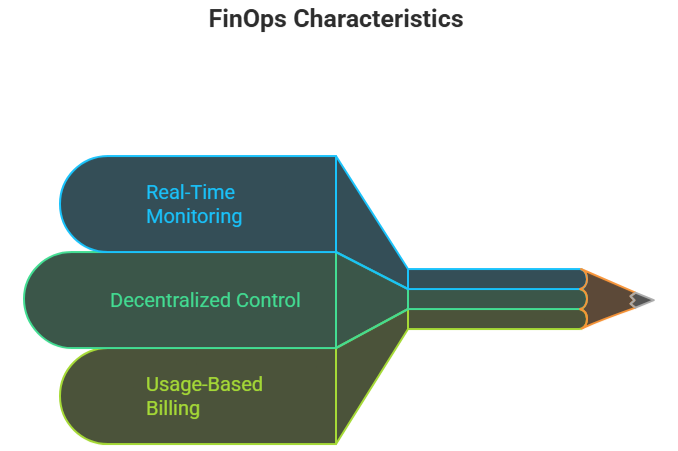
Cloud FinOps ensures that every dollar spent in the cloud delivers value
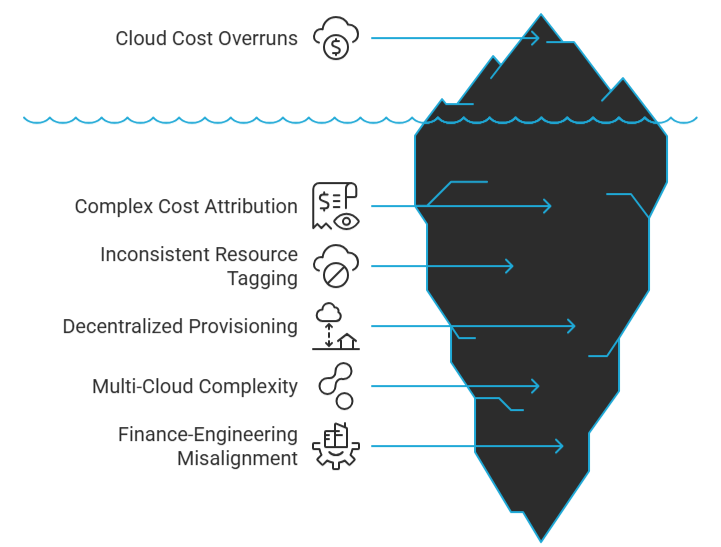
Cloud Financial Management Challenges
Cloud FinOps Core Principles
Resolve these challenges by adopting these core principles:
Cost Attribution and Tag Governance
Define, automate, and enforce tagging policies. Use infrastructure-as-code and policy-as-code tools to ensure consistency and compliance. See how SquareShift standardized cloud cost tags for a global semiconductor company in this FinOps product tagging case study.
Continuous Optimization
Cloud environments are dynamic. Cost optimization is continuous. This process includes: identifying underutilized resources; adjusting instance types; rightsizing workloads; monitoring discount utilization. For BigQuery workloads, see how to reduce BigQuery costs and improve query performance.
Unit Economics
Calculate the cost per customer, feature, or product. FinOps links cost data to business metrics. This capability drives informed decisions.
Cross-Functional Collaboration
FinOps requires multi-team participation. Engineering, finance, operations, and product teams must: interpret data; set budgets; make trade-offs. Regular collaboration drives success.
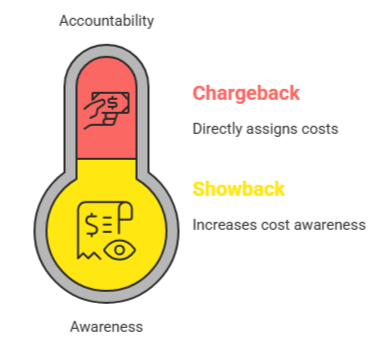
Cost Visibility: Showback and Chargeback
Cloud cost models progress from awareness to direct assignment.
FinOps Implementation Practices
Cloud Engineering and Operations Teams
- Automate tagging with infrastructure-as-code templates, such as Terraform or CloudFormation.
- Apply guardrails, such as AWS SCPs and Azure Policies, to enforce tagging and configuration standards.
- Review cost dashboards during retrospectives and sprint planning sessions.
For Finance Teams
- Define cost allocation models that align with business units or initiatives.
- Include cloud spending in budgeting and forecasting cycles.
- Work with engineering teams to identify primary cost drivers.
For Technology and Business Leaders
- Support the creation of a central tagging taxonomy and enforcement system.
- Connect FinOps targets to strategic goals. Examples include innovation speed, customer growth, or platform reliability.
Provide adequate resources for FinOps. View financial visibility as a long-term capability, not a one-time project.
Building FinOps as a Capability, Not a Project
FinOps is a capability, not a product. It evolves over time. Successful organizations use a phased approach:
- Phase 1: Achieve visibility.
- Phase 2: Establish accountability.
- Phase 3: Enable predictive optimization and strategic decision-making.
This journey requires technical investments, process changes, and cultural shifts. Cloud costs must move from backend concerns to critical inputs for engineering and business decisions.
In complex, multi-cloud environments, FinOps is necessary. It ensures cloud investments deliver measurable value.
Part 2 of this series addresses real-world challenges in cloud financial management. Topics include lack of visibility and fragmented ownership. We provide practical, scalable solutions to address these issues.
Learn how SquareShift helps teams build mature FinOps capabilities.
Cloud FinOps
Cloud FinOps: Definition and Business Value
Cloud FinOps is a collaborative framework for managing cloud spending. It unites finance, engineering, and operations teams to align costs with business value. FinOps provides visibility, control, and accountability for usage-based costs. It transforms cloud spending from an operational issue into a strategic planning tool.
How Cloud FinOps differs from cost optimization
Cost optimization targets expense reduction. Cloud FinOps is broader. It combines financial accountability, operational processes, and cross-team collaboration. Teams make trade-offs between speed, cost, and quality. FinOps maximizes business value from cloud investments.
What are the key principles of a successful FinOps strategy?
A successful FinOps strategy relies on five core principles:
Continuous Optimization. Right-size resources regularly. Monitor discounts.
Unit Economics. Calculate the cost to serve a customer or deploy a feature.
Cross-Functional Collaboration – Aligns finance, engineering, and operations teams.
Cost Visibility – Uses showback and chargeback models to clarify cloud spend for decision-making.
How Do Organizations Implement Cloud FinOps Effectively?
FinOps implementation requires technical tools and cultural change.
- Engineering teams automate tagging and enforce policies with guardrails.
- Finance teams align budgeting and forecasting with actual cloud usage.
- Leadership sponsors governance and integrates FinOps into strategic objectives.
FinOps maturity evolves from basic visibility to predictive optimization. This progression enables value-driven cloud decisions.
How Can SquareShift Support Your Organization’s Cloud FinOps Implementation?
SquareShift builds cloud FinOps capabilities from first principles. We assess current cloud spending. We implement automated tagging and cost allocation. We deploy real-time dashboards. We align finance, engineering, and operations. We optimize cost and business value.
How does SquareShift differentiate FinOps services?
SquareShift uses a holistic model. We combine technical implementation, process design, and cultural enablement. We create a long-term capability. We support multi-cloud environments. We enable continuous optimization. We support strategic decisions. We convert cloud spend into measurable business advantage.
Does SquareShift support multi-cloud FinOps?
SquareShift supports AWS, Azure, Google Cloud, and hybrid architectures. We unify financial visibility across platforms. We implement governance policies. We provide actionable insights. We ensure consistent cost accountability. We enable accurate showback and chargeback. We align cloud usage with business outcomes.
- Cost Attribution and Tag GovernanceEstablish clear tagging policies to allocate costs accurately.