
Capabilities of Large Language Models
Large Language Models (LLMs) change how machines process human language. These models support chatbots and medical diagnostics. They enable fluent interaction. This analysis defines LLM architecture and explains their impact on AI.

Definition of Large Language Models
Large Language Models (LLMs) process, understand, and generate text. They use billions or trillions of parameters to capture language nuance, context, and meaning from large datasets.
Consider a question posed to an AI assistant. The LLM parses the input, determines intent, and generates a coherent response.
Core Mechanisms of LLMs
LLM operation relies on the following processes:
- Tokenization: Converts text into discrete units, such as words, subwords, or characters, called tokens.
- Vectorization: Converts tokens into numerical vectors for model processing.
- Processing: Uses transformer architecture to analyze token relationships and context.
- Inference: Predicts the next token to generate coherent responses.
- Output: Generates a response tailored to the input prompt.
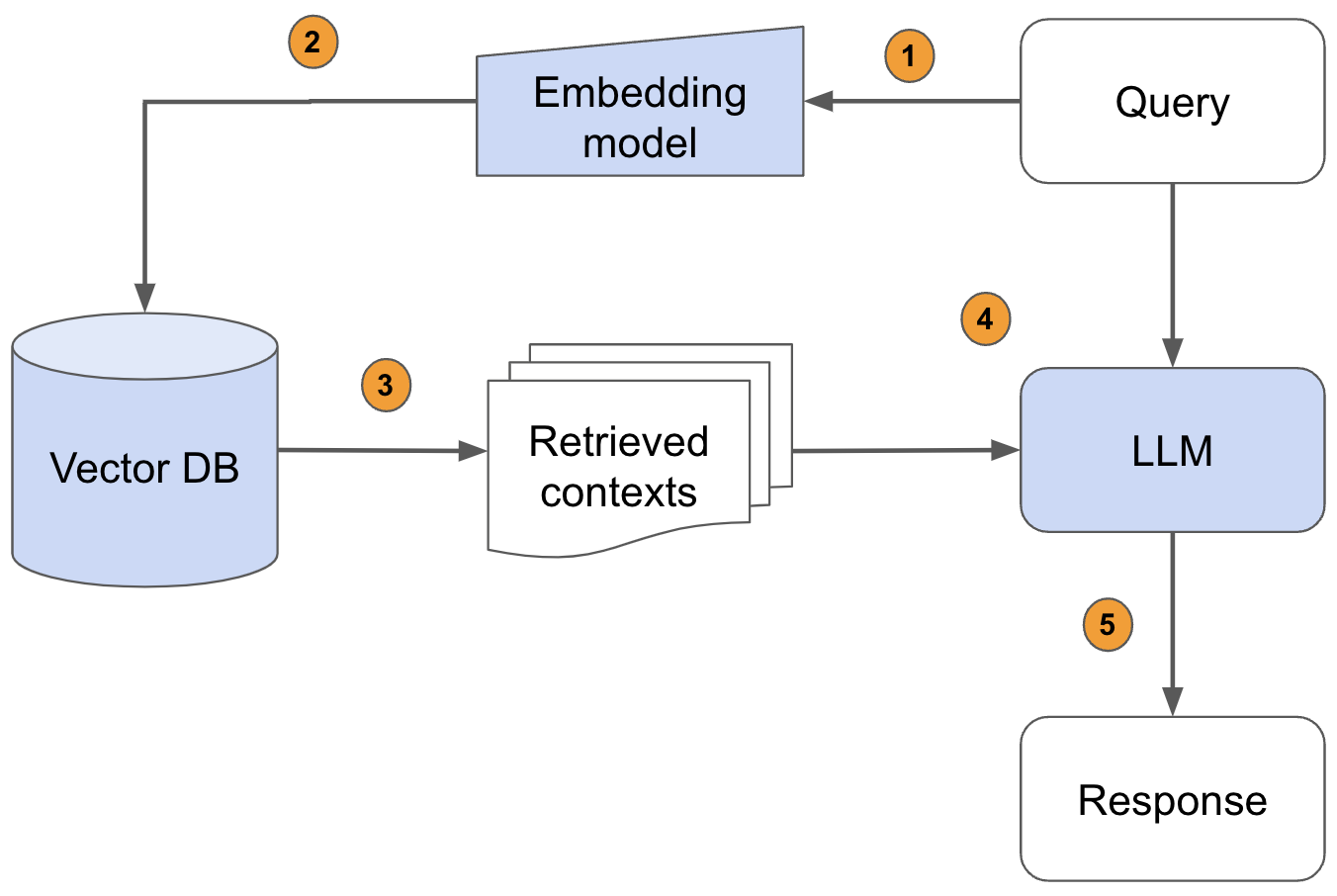
Figure 1 illustrates this process:
LLM Workflow
Core Capabilities of LLMs
- Context Management: LLMs process complex dialogue and maintain conversational state.
- Specialization: Fine-tuning adapts models to specific domains, such as healthcare or customer support.
- Content Generation: LLMs produce diverse text types, including poetry and screenplays.
LLM Applications in Practice: Real-World Use Cases
LLMs modify multiple industries through the following functions:
- Virtual Assistants: Chatbots for customer service and personal tasks
- Content Generation: Articles, summaries, and creative drafts
- Education: Interactive tutoring and customized learning paths
- Coding: Debug code, suggest fixes, and explain logic.
- Healthcare: Support diagnostics, generate clinical notes, and summarize research.
LLMs in Medicine
LLMs improve healthcare in three key ways:
- Diagnostics: Analyze symptoms and medical history to support clinical decisions.
- Clinical documentation: Summarize patient records to reduce administrative time.
- Medical research: Extract key findings from literature reviews to accelerate analysis.
- Drug discovery: Analyze chemical compounds and predict outcomes to support research workflows.
Top 5 LLMs
Leading LLMs in 2024:
| Model | Organization |
|---|---|
| GPT-4 | OpenAI |
| Gemini Pro | Google DeepMind |
| Claude 2 | Anthropic |
| LLaMA 2 | Meta |
| PaLM 2 |
LLM Ethics: Challenges and Ethical Constraints
- Hallucination: LLMs can output plausible but incorrect data. Google Gemini Pro implemented accuracy updates to mitigate this risk.
- Bias: Models may replicate biases inherent in training datasets.
- Privacy Risks: Processing sensitive data creates legal and ethical compliance challenges.
- Misinformation: Continuous monitoring is required to prevent the spread of false information.
The Future of Large Language Models
Emerging Trends and Innovations
- Multimodal models process text, images, and video to enhance interaction.
- Smaller, efficient models require fewer computational resources.
- Industry-specific models target healthcare, finance, and education.
- Real-Time Learning: Models that update knowledge dynamically.
Future Pipeline
Expectations for the coming years:
| Feature | Description | Expected Impact |
|---|---|---|
| Explainable AI | Transparent decision-making processes. | Builds trust in critical fields |
| On-Device Models | Running LLMs locally for privacy and speed. | Enhanced user security. |
| Global Accessibility | Localized models for underserved languages. | Bridging the digital divide. |
Conclusion
LLMs reshape industries and enable new capabilities. Understanding their power and constraints supports responsible adoption for societal benefit.
The next article details how to build LLM-powered applications.
SquareShift offers AI implementation services to help teams adopt LLMs responsibly.
To check LLM quality, read our introduction to evaluating generative AI systems.