
Compilers convert source code into optimized executables. They improve code efficiency, maintainability, and compatibility.
Previous articles covered TypeScript and Babel. This article examines Flow and PureScript. Both tools strengthen JavaScript development:
- They add static type safety.
- They improve code quality.
- They support scalable architectures.
Flow
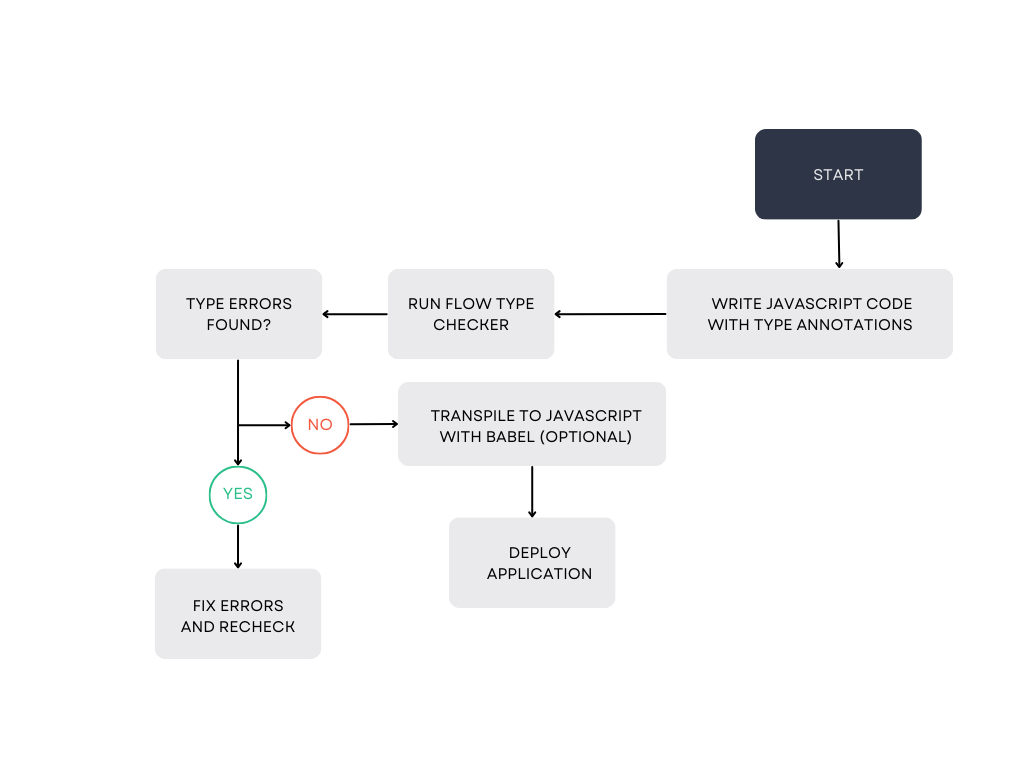
Flow is a static type checker for JavaScript. Facebook created this tool. It checks types during compilation. It does not transform code. Flow detects type errors before runtime execution. Unlike TypeScript, Flow uses an optional type system. You can add types to existing JavaScript files. This approach supports gradual adoption. You do not need to rewrite the codebase.
Use Cases
- Gradual Type Safety: Flow supports teams adding type checking to JavaScript projects without a full rewrite. It suits large, legacy codebases where TypeScript adoption is disruptive. Facebook uses Flow to increase JavaScript reliability without migrating to TypeScript.
- Error Prevention in Large Codebases: Flow reduces the risk of bugs in large codebases. It catches type errors early, improving code quality and productivity. Airbnb uses Flow to catch errors, support developer collaboration, and prevent costly defects. → JavaScript frameworks for web development
- Dynamic Type Checking: Flow supports dynamic typing in specific application areas. This offers flexibility compared to TypeScript while maintaining type safety. In complex, fast-changing applications, Flow allows gradual type annotation without disrupting workflows.
How to Use Flow
flow init
flow check <filename>.js
Metrics
- Adoption: Flow serves large JavaScript codebases requiring incremental typing.
- GitHub Stars: 22.5k+
- Community: Active development has slowed. Teams already using PureScript value its gradual adoption of type checking.
PureScript
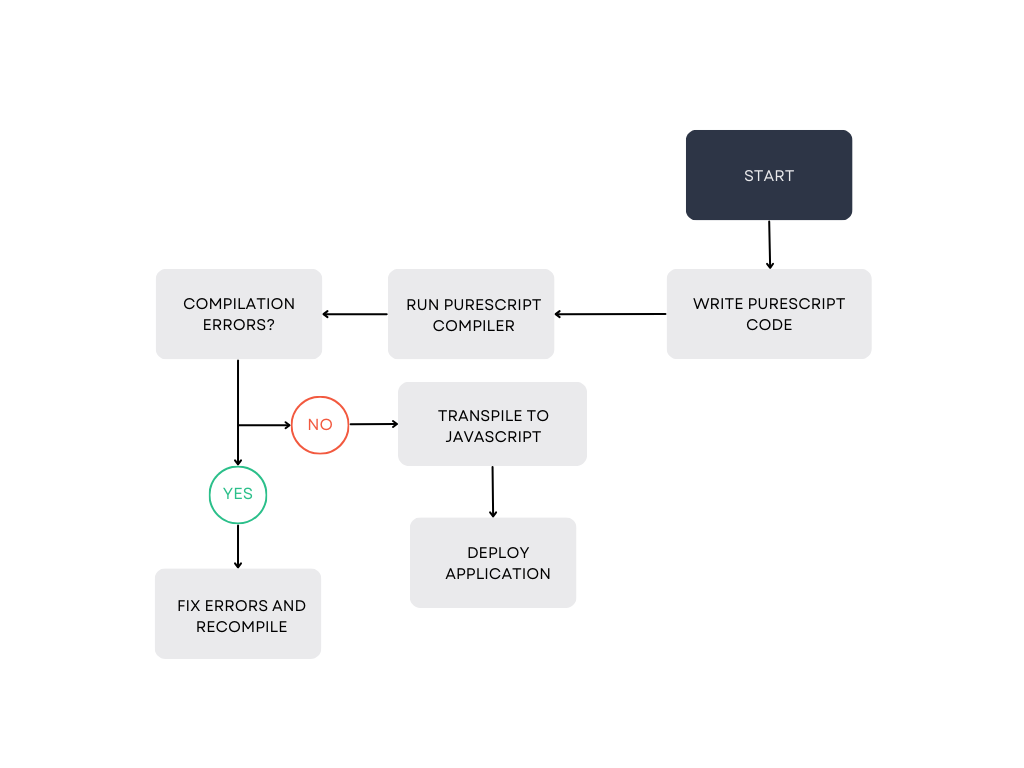
PureScript is a strongly-typed, functional language that compiles to JavaScript. It is not a JavaScript superset. It provides a distinct approach to JavaScript development.
Use Cases
- Functional Programming Enthusiasts: Developers with functional programming experience use PureScript to build robust, maintainable JavaScript. Its features support highly predictable code and minimal side effects. Use it for complex state management or mathematical computations that require immutability and strong typing.
- Use PureScript for large, complex projects. - Static typing catches errors early. - Strong guarantees support correctness and maintenance. - Mission-critical systems, such as financial applications, benefit from strict type safety.
- Integrate PureScript with existing JavaScript codebases. - Adopt functional programming in specific modules. - No full rewrite is required. - Web applications use PureScript for targeted components while maintaining JavaScript interoperability.
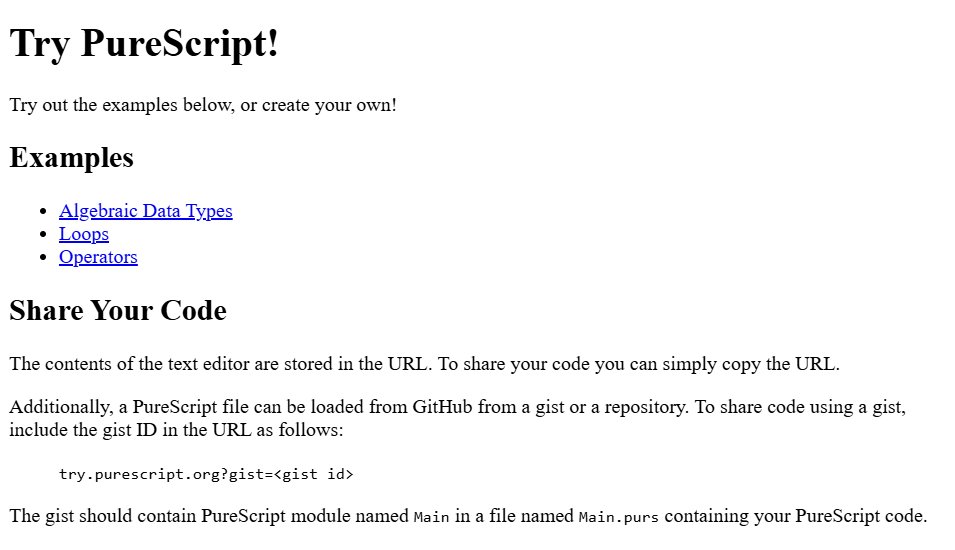
The following code compiles using the PureScript compiler:
module Main where

import Prelude

import Data.Foldable (fold)
import Effect (Effect)
import TryPureScript (code, h1, h2, indent, link, list, p, render, text)

main :: Effect Unit
main =
  render $ fold
    [ h1 (text "Try PureScript!")
    , p (text "Try out the examples below, or create your own!")
    , h2 (text "Examples")
    , list (map fromExample examples)
    , h2 (text "Share Your Code")
    , p (text "The contents of the text editor are stored in the URL. To share your code you can simply copy the URL.")
    , p (text "Additionally, a PureScript file can be loaded from GitHub from a gist or a repository. To share code using a gist, include the gist ID in the URL as follows:")
    , indent (p (code (text "  try.purescript.org?gist=<gist id>")))
    , p (fold
        [ text "The gist should contain PureScript module named "
        , code (text "Main")
        , text " in a file named "
        , code (text "Main.purs")
        , text " containing your PureScript code."
        ])
    ]
  where
  fromExample { title, source } =
    link ("https://github.com/purescript/trypurescript/tree/master/client/examples/" <> source) (text title)

  examples =
    [ { title: "Algebraic Data Types"
      , source: "ADTs.purs"
      }
    , { title: "Loops"
      , source: "Loops.purs"
      }
    , { title: "Operators"
      , source: "Operators.purs"
      }
    ]
Share Code
The editor stores code in the URL. Copy the URL to share code.
Load PureScript files from GitHub gists or repositories. To share code via a gist, add the gist ID to the URL:
try.purescript.org?gist=<gist id>
Provide a PureScript module named "Main" in a file named "Main.purs" containing your code.
The following code compiles to PureScript:
Metrics:
- PureScript adoption focuses on functional programming. It suits industries that require strong types for safety and maintainability.
- GitHub stars: 7,500+
- Community: PureScript has a smaller user base than Flow. Its community focuses on functional programming in JavaScript. It sees growing use in projects with complex logic or mathematical computation.
Conclusion
Flow and PureScript provide advanced tools for JavaScript developers. They prioritize type safety, performance, and code optimization. Closure Compiler handles minification, dead code elimination, and large-scale optimization. PureScript adds functional programming and strict typing to the JavaScript stack. These tools help improve application performance, maintainability, and scalability. Consult our software development team for compiler selection or tooling integration.