
Compilers convert source code into executable programs. In JavaScript, compilers optimize performance and ensure cross-platform compatibility. Early compilers handled basic transformations. Modern compilers support ES6+ syntax and TypeScript. This allows developers to write cleaner and more efficient code.
Our analysis of top JavaScript libraries shows that most use Babel during build time and TypeScript during development.
TypeScript
TypeScript is a statically typed superset of JavaScript. It adds optional static typing, interfaces, generics, and type aliases. These features allow developers to define types. The compiler catches errors before runtime. This reduces runtime failures and improves code quality. TypeScript maintains full compatibility with JavaScript. This allows teams to migrate existing projects incrementally. Integrated tools provide enhanced autocompletion, refactoring, and debugging capabilities. These tools improve developer productivity.
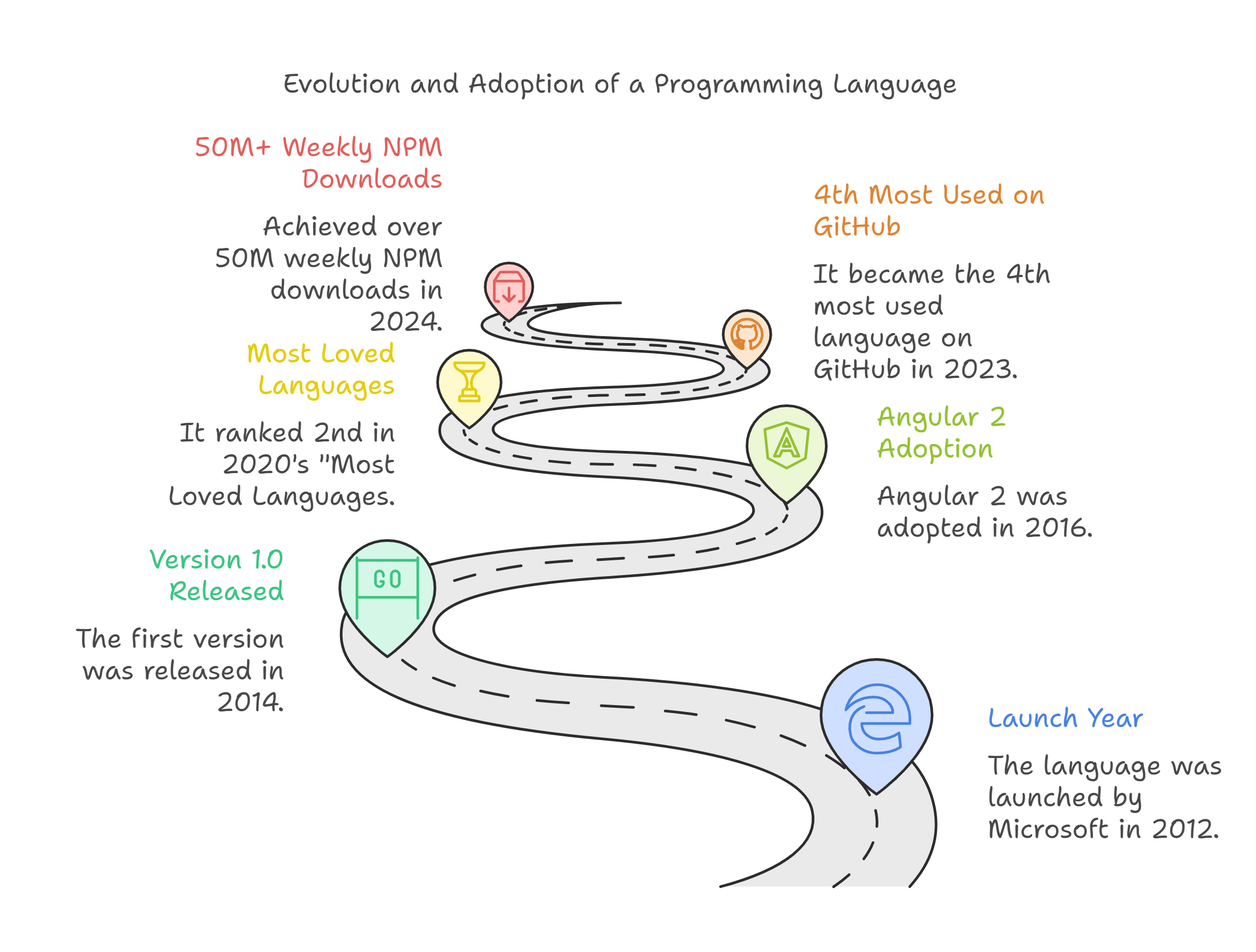
Use Cases:
- Large-Scale Web Applications: Static typing improves the scalability and maintainability of large applications. The compiler catches errors before deployment. This reduces bugs and saves development time. Example: Airbnb uses TypeScript to manage complex web architecture. This improves code quality and system scalability.
- Enterprise-Grade Applications: Strong typing facilitates collaboration among large teams. It ensures consistent code quality and system reliability. Example: Microsoft uses TypeScript for products such as Azure. This approach enhances code safety and supports integrated development environment features.
- Front-End Development with Frameworks: TypeScript integrates with modern front-end frameworks including React, Angular, and Vue. It reduces runtime errors and supports code scalability. Example: Slack uses TypeScript for front-end development. This supports consistent and scalable application updates.
- Server-Side Development: TypeScript supports Node.js full-stack development. It enforces type consistency between client and server code. This practice reduces errors. LinkedIn uses TypeScript in Node.js server-side code to streamline development and improve productivity.
- Mobile App Development: TypeScript enhances React Native cross-platform applications. It detects errors before runtime execution. Walmart uses TypeScript in React Native mobile apps to improve performance and maintainability.
Compile TypeScript to JavaScript:
tsc <filename>.ts
Performance: The TypeScript compiler generates optimized JavaScript output. Static type checking prevents runtime bugs.
Babel Compiler
Babel transpiles modern JavaScript code to ensure compatibility with legacy environments. It converts ECMAScript 6 and later syntax into versions supported by older browsers. This approach allows developers to use current language features without addressing compatibility constraints.
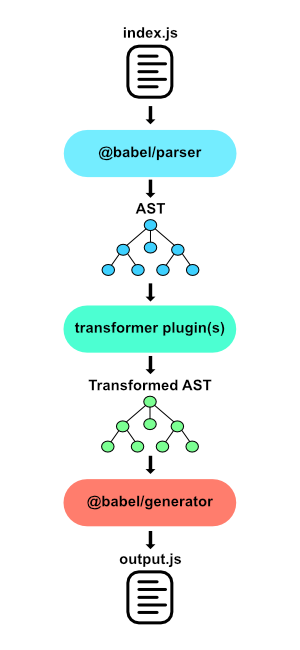
Key Applications
- Browser Compatibility: Babel converts ES6+ code to ES5. This process ensures web applications function in older browsers. • Example: Netflix uses Babel to maintain consistent performance across various browser versions.
- React Development: Babel transpiles JSX into standard JavaScript. This step enables React’s component structure to execute without browser compatibility errors. • Example: Facebook utilizes Babel to process JSX code for its React applications.
- Inject runtime polyfills: Babel adds missing runtime features to support new syntax, such as async/await, in legacy browsers. Example: Airbnb applies Babel to ensure cross-browser feature parity through targeted polyfills.
- Extend syntax with plugins: Babel plugins modify the parser to support extensions like class properties, decorators, and private methods. Example: Twitter leverages Babel plugins to adopt advanced JavaScript features in front-end code.
- Optimize production builds: Babel minifies and optimizes code to reduce file size and improve load performance. Example: Instagram uses Babel to minimize JavaScript bundles, enhancing page speed and user experience.
Transpile JavaScript with Babel:
npx babel <filename> --out-file <outputfile>.js
Performance: Babel adds processing time. Its flexibility offsets this cost in most projects.
Conclusion:
TypeScript and Babel serve different functions in modern JavaScript development:
- TypeScript adds static typing. It improves scale and maintenance.
- Babel converts new syntax. It enables broad environment support.
Use both to build reliable applications.
We examine two tools that improve performance and code quality:
- Flow
- PureScript