
Brendan Eich created JavaScript at Netscape in 1995. It is a high-level language essential for modern web development. Early use focused on adding interactivity to static websites. It now enables dynamic behavior, such as animations and real-time updates, directly in the browser without server-side processing. JavaScript has evolved from a basic scripting tool into a robust language for building complex web applications. Learn more about our data services: Click here.
JavaScript is essential for creating engaging user experiences across multiple platforms. It supports the interactive features users expect from modern websites.
Upcoming Topics
This series examines key JavaScript frameworks used in web development. Each post covers one domain: frontend, backend, compilers, data visualization, or state management. We compare leading frameworks and define their primary use cases.
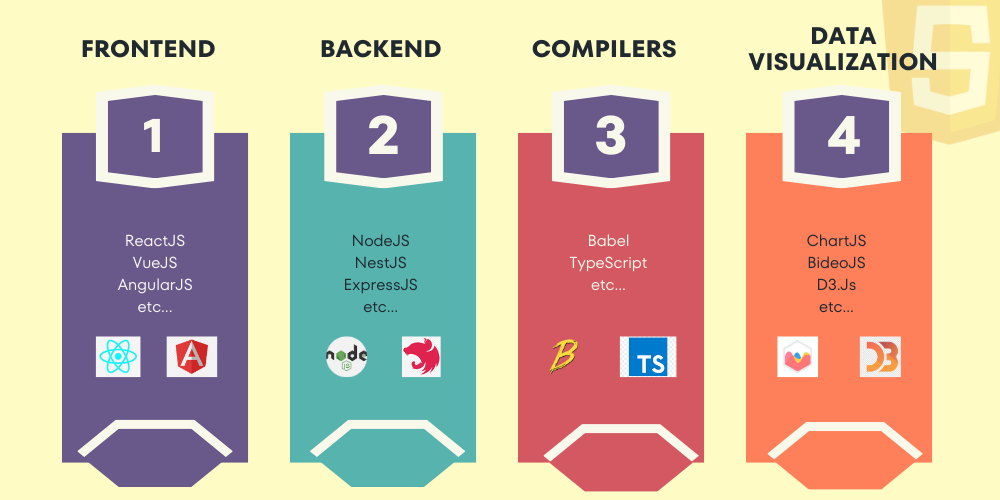
The following posts cover these topics:
Frontend Frameworks
This section compares major JavaScript frontend frameworks, including React, Angular, and Vue. The analysis covers architecture, rendering methods, and UI state management.
React: Suited for dynamic user interfaces and single-page applications.
Angular suits large-scale, enterprise applications. This comparison identifies the framework that fits specific frontend development scenarios.
Backend Frameworks
We examine backend frameworks that run server-side logic. This includes Node.js and modern alternatives such as Deno and Bun.
Node.js and Express suit real-time applications and APIs.
Deno is a modern, secure alternative to Node.js. We show how these frameworks support different use cases. This guides your choice for scalable server-side development.
JavaScript Compilers
This section examines Babel, TypeScript, and other compilers. These tools expand browser compatibility and enhance development through static typing.
Babel: Supports modern JavaScript features in older browsers.
TypeScript: Adds static typing to detect errors and improve scalability. This section explains how these tools improve code quality and performance. It provides guidance for selecting the appropriate tool for your project.
Data Visualization Libraries
This section reviews JavaScript libraries for data visualization, including D3.js and Chart.js.
D3.js: High flexibility. Steep learning curve.
Chart.js: Suitable for simple, static charts.
Highcharts: Supports interactive, real-time visualizations. Minimal setup. We select the appropriate library for data-intensive applications.
JavaScript State Management
This section covers state management libraries such as Redux, Vuex, and Recoil. These tools manage data flow in complex applications.
Redux: A standard tool for global state management in React applications.
Vuex: A centralized state container for Vue applications.
Recoil: A flexible state management option for React. The following comparison guides selection based on project requirements.

Conclusion
This series examines popular JavaScript frameworks. It covers frontend and backend development, compilers, data visualization, and state management. Each section details specific features, strengths, and use cases. Use this information to select appropriate tools for your projects.
Java experts seeking opportunities with us
Submit your resume