
Web development requires high speed and a strong user experience. Two primary techniques drive content delivery: Server-Side Rendering (SSR) and Static Site Generation (SSG). Both methods improve performance. This article compares the two to help you select the best option for your project. The explanation remains accessible to non-technical stakeholders.

Comparison: Freshly Brewed Coffee vs. Instant Coffee
Consider content delivery similar to coffee preparation:
- SSR generates pages at request time. The server renders content dynamically for each user.
- SSG generates pages at build time. The system serves pre-rendered content without real-time processing.
Selection Criteria
SSR:
Select SSR for real-time data or personalized views. Examples include stock prices and social media feeds.
- The server compiles the page for the specific user at the moment of the request.
Static Site Generation (SSG):
Use SSG for static content, such as blogs and landing pages.
- SSG delivers content quickly and maintains performance under high traffic loads.
Definition of Server-Side Rendering (SSR)
In Server-Side Rendering (SSR), the server generates HTML for each user request. This process retrieves data, processes it, and transmits the complete HTML to the browser. Users receive the current page state with dynamic content.
SSR Key Benefits:
- Real-Time Data: Suitable for applications using user-specific data, such as e-commerce platforms and dashboards.
- Search Engine Optimization (SEO): Search engines index fully rendered HTML. SSR can improve site rankings.
- Reduced Initial Load Time: Users see content faster. This occurs even before JavaScript executes.
Each page request requires server processing. This limits scalability during peak load. SSR suits high-interaction sites with fast user experiences.
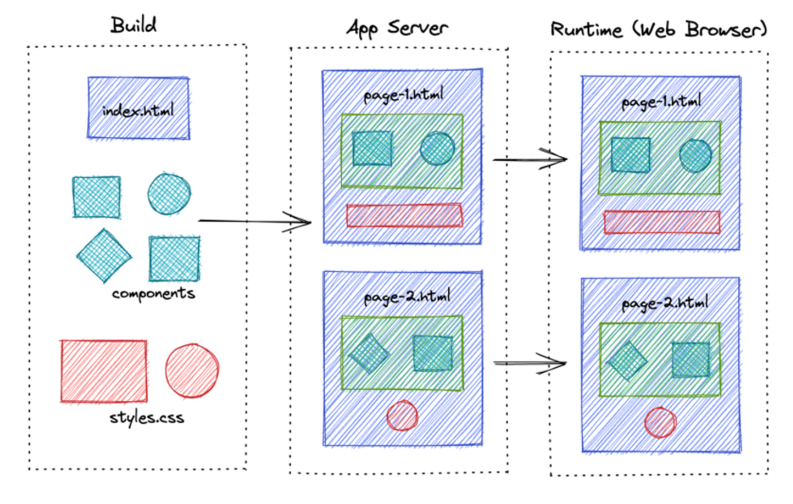
The following figure compares SSR and SSG. Credit: Pahan Perera.
Definition: Static Site Generation (SSG)
SSG pre-builds pages as static HTML files. Users receive these files immediately. The server performs no runtime processing. This creates a fast user experience.
Benefits of SSG
- Fast load times: Pre-built pages serve static HTML instantly.
- High scalability: Static files from a CDN handle high traffic loads without server strain.
- Low operating cost: No complex server processing per request. Ideal for static content such as blogs and product pages.
SSG limitations: Requires additional logic for dynamic or personalized content. Not suitable for frequently updated data.
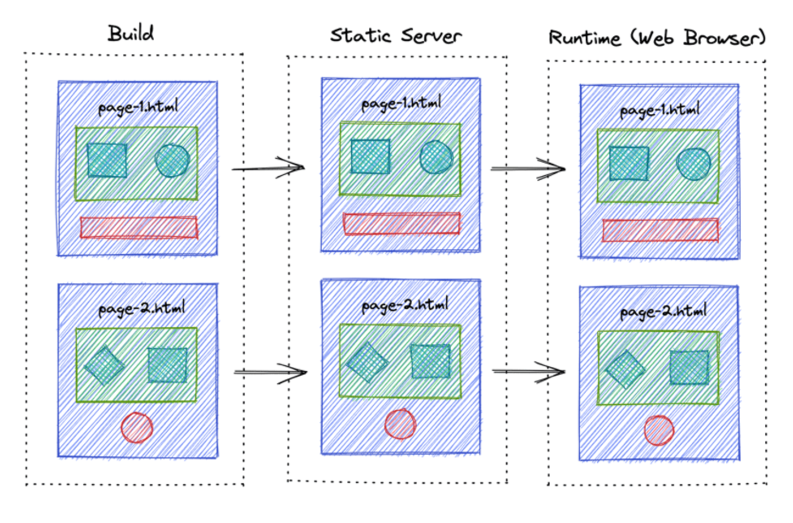
Figure: Visual comparison of SSR and SSG. Image credit: Pahan Perera.
SSR vs. SSG: A Comparison
Select SSR or SSG based on your requirements.
| Feature | SSR (Fresh Brew) | SSG (Instant Coffee) |
|---|---|---|
| Real-Time Content | Perfect for dynamic, personalized data | Not ideal for dynamic content |
| Speed | Faster load for static content, but dynamic content may take longer | Lightning-fast, ready-to-serve pages |
| SEO | Great for SEO with pre-rendered HTML | Also excellent for SEO |
| Scalability | Can be resource-heavy under high traffic | Easily scales without added cost |
Combining SSR and SSG
Frameworks like Next.js support both SSR and SSG.
- Hybrid rendering. Use SSR for dynamic pages. Use SSG for static pages. This approach applies to micro-frontend architecture.
- Incremental Static Regeneration (ISR): ISR regenerates specific pages after the initial build. This keeps content current without rebuilding the entire site.
This method provides flexibility. It optimizes performance for each site component.
JavaScript compilers: SWC, Flow, TypeScript
Frameworks for SSR and SSG
Modern frameworks simplify SSR, SSG, and hybrid implementations:
| Framework | Capabilities | Primary Use Case |
|---|---|---|
| Next.js | Supports SSR, SSG, and Hybrid | Dynamic content, e-commerce, blogs, and documentation |
| Nuxt.js | SSR/SSG for Vue.js applications | Vue-based apps with SEO and speed optimization |
| Gatsby | Focuses on SSG and incremental builds | Static blogs, portfolios, and high-speed apps |
| Hugo | Fast static site generator | Portfolios and blogs needing lightning-fast speed |
| SvelteKit | SSR-first with static export support | Highly interactive apps and performant builds |
Evaluate JavaScript Frameworks for Web Development
Deployment Examples
Key production applications using these frameworks:
- Next.js: Supports Hulu (streaming), Nike (e-commerce), and HashiCorp (documentation).
- Gatsby: Powers high-traffic sites for Airbnb, IKEA, and Nike.
- Hugo: Developers value this tool for fast and simple static site generation.
Conclusion: Select the Correct Method
Select SSR or SSG based on your objectives:
- Select SSR if you require current, real-time data and personalized user experiences.
- Select SSG if your content remains stable and you require high speed and scalability.
Combine SSR and SSG to meet specific requirements. Use appropriate tools to deliver high performance, current content, and a consistent user experience.
SSR and SSG serve distinct purposes in web development. Select the rendering strategy based on content requirements and performance goals. Contact our frontend development team for guidance on architecture decisions.