
Propensity modeling predicts the probability of customer actions, such as purchases or churn. BigQuery ML (BQML) provides Google machine learning capabilities within BigQuery. Data teams use BQML to build and deploy models directly in their data warehouse. This guide covers model creation, applications, and benefits.
Definition of Propensity Modeling
Propensity modeling estimates the probability of a specific action using historical data. In marketing, it predicts outcomes such as purchase likelihood, retention, and ad clicks. These predictions support targeted outreach. BigQuery ML uses a SQL interface to build models. This approach removes the need for external machine learning platforms.
Benefits of BigQuery ML for Propensity Modeling
BigQuery ML offers these advantages:
- Simplicity: SQL syntax allows teams to build models without Python or R expertise.
- Integrated Workflow: Direct dataset access in BigQuery eliminates cross-platform data transfers.
- Scalability: BigQuery infrastructure processes large datasets for enterprise environments.
- Speed and Efficiency: BQML optimizes model training and evaluation faster than traditional setups.

Create a Propensity Model in BigQuery ML
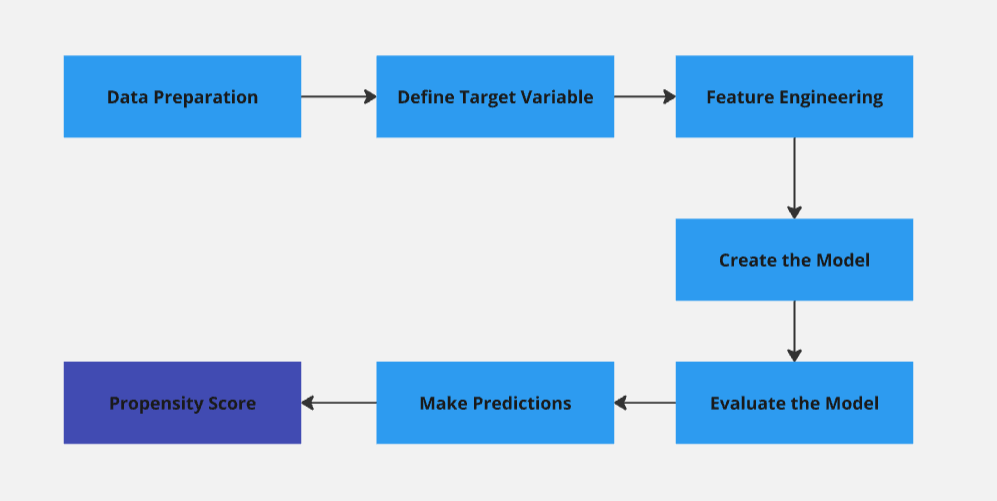
Follow these steps to build a propensity model:
- Data Preparation: Load a dataset into BigQuery. Include features such as customer demographics and engagement metrics. Define a target variable for the predicted behavior, for example, purchase likelihood.
- Define Target Variable: Set a binary target variable, such as will_purchase (1 for likely to purchase, 0 for not likely). This defines the prediction goal.
- Feature Engineering: Build features that affect the target variable. Examples include recency (days since the last purchase), frequency (count of recent interactions), and engagement scores.
- Create the model: Build the model in BigQuery ML using SQL. To create a logistic regression propensity model, run a query similar to: CREATE OR REPLACE MODEL `your_dataset.propensity_model` OPTIONS(model_type='logistic_reg') AS SELECT age, gender, location, previous_purchases, engagement_score, will_purchase FROM `your_project.your_dataset.customer_data`
- Evaluate the model: Measure performance using BigQuery evaluation functions. Review metrics such as accuracy and AUC (Area Under Curve): SELECT roc_auc, accuracy FROM ML.EVALUATE( MODEL `your_dataset.propensity_model`, (SELECT * FROM `your_project.your_dataset.customer_data`) )
- Generate predictions: Run predictions on new or existing data: SELECT customer_id, predicted_will_purchase, predicted_will_purchase_probs[OFFSET(1)] AS propensity_score FROM ML.PREDICT( MODEL `your_dataset.propensity_model`, (SELECT * FROM `your_project.your_dataset.new_customer_data`) )
- The propensity_score indicates the likelihood of customer behavior. This data supports targeted actions.
Applications of Propensity Modeling in BigQuery
Business teams use propensity models for:
- Targeted Marketing. Focus campaigns on high-propensity customers.
- Customer Retention. Identify at-risk accounts and deploy proactive interventions.
- Revenue Expansion. Predict readiness for cross-sell and upsell offers.
Implementation Guidelines
- Feature Selection: Select features that match customer behavior to improve model accuracy.
- Model Maintenance: Retrain models on a schedule to reflect changing customer patterns.
- Data Privacy: Ensure customer data complies with privacy regulations, including GDPR.
Summary
BigQuery ML streamlines the build and deployment of propensity models inside the data warehouse. It supports data-driven decisions. Users gain actionable insights within BigQuery. Organizations personalize engagement. They optimize resource allocation. BQML models explain customer behavior. Businesses use these models for targeted strategies.