
Accurate demand forecasting is essential for efficient inventory management. BigQuery ML enables data-driven decisions that lower costs and meet customer demand. This article details how to use BigQuery ML to improve forecasting and streamline supply chain operations. It includes a retail case study.
In short, demand forecasting with BigQuery ML means preparing sales, inventory and external data in BigQuery, selecting a model such as Linear Regression, ARIMA+ or Boosted Tree Regressor, training it with SQL, assessing accuracy and generating forecasts.

Why Demand Forecasting Matters
Demand forecasting predicts future customer demand using historical data and market trends. Accurate forecasts allow businesses to:
- Reduce Inventory Costs: Prevent overstocking or understocking.
- Enhance Supply Chain Efficiency: Align production and procurement schedules.
- Improve Customer Satisfaction: Ensure product availability and on-time delivery.
- Optimize Resources: Allocate labor and capacity effectively.
Traditional forecasting methods often miss complex data patterns. BigQuery ML captures these relationships.
Benefits of BigQuery ML for Demand Forecasting
BigQuery ML lets data scientists and analysts build and deploy machine learning models inside Google BigQuery. This service is a fully managed, serverless data warehouse. Key benefits are:
- Simplicity: The SQL interface removes the need for extensive coding.
- Scale: The system processes large datasets. It suits enterprise-scale operations.
- Integration: The tool connects with Google Cloud services and external data sources.
- Speed: Fast model training and prediction. No data movement between systems.
Steps to Implement Demand Forecasting with BigQuery ML

1. Data Preparation
Prepare data for demand forecasting. Key sources include:
- Sales Data: Historical sales records.
- Inventory Data: Stock levels and replenishment cycles.
- External Factors: Seasonality, holidays, economic indicators, and weather.
Structure the data in BigQuery. Use SQL to clean and transform the data. Handle missing values, outliers, and aggregations.
2. Select the Model
BigQuery ML supports multiple machine learning models. Use the following models for demand forecasting:
- Linear Regression: Fit simple relationships to continuous variables.
- ARIMA+: Forecast time series data with seasonality.
- Boosted Tree Regressor: Model complex, non-linear patterns. Learn how we apply BigQuery ML forecasting to sales operations.
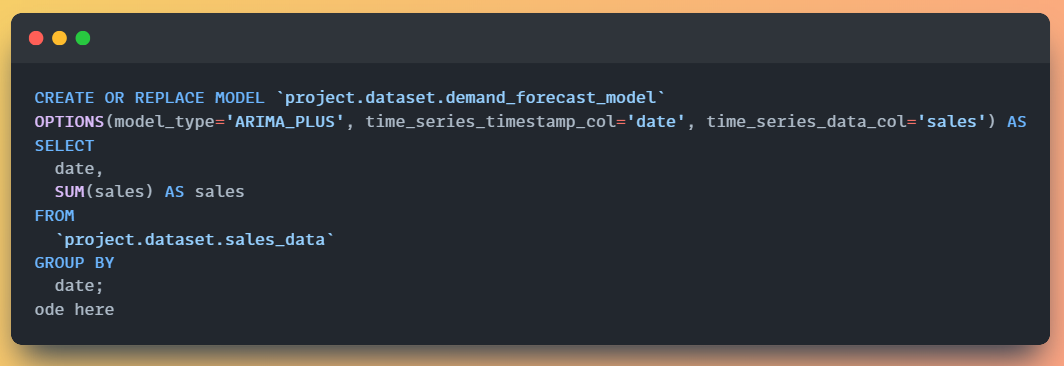
3. Train the Model
Create and train the model with BigQuery ML. To build a time series forecast, run the following SQL command:
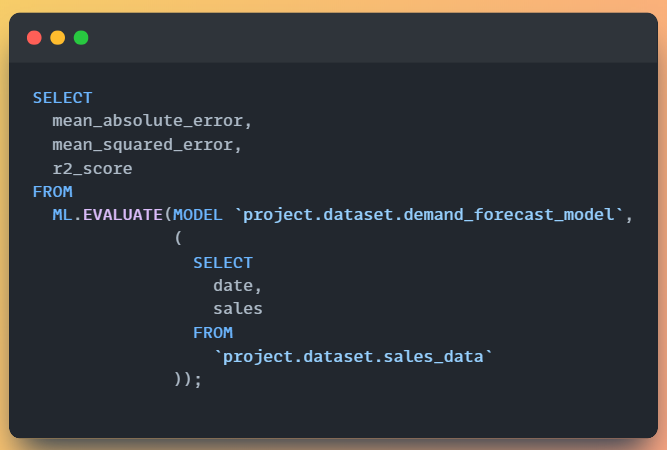
4. Assess Model Accuracy
- Measure performance using Mean Absolute Error (MAE), Mean Squared Error (MSE), or Root Mean Squared Error (RMSE).
- Analyze residuals to identify data gaps or model weaknesses.
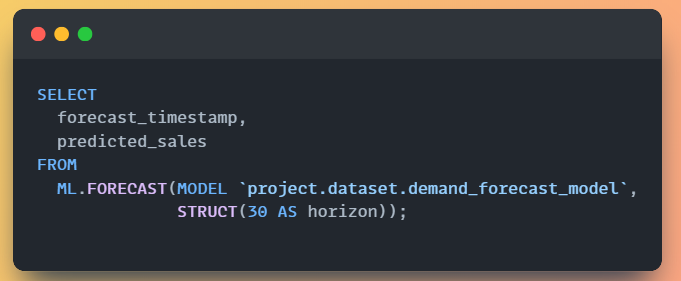
5. Generate Demand Forecasts
- Run the trained model to project future demand.
- Set the prediction horizon and required parameters in BigQuery ML.
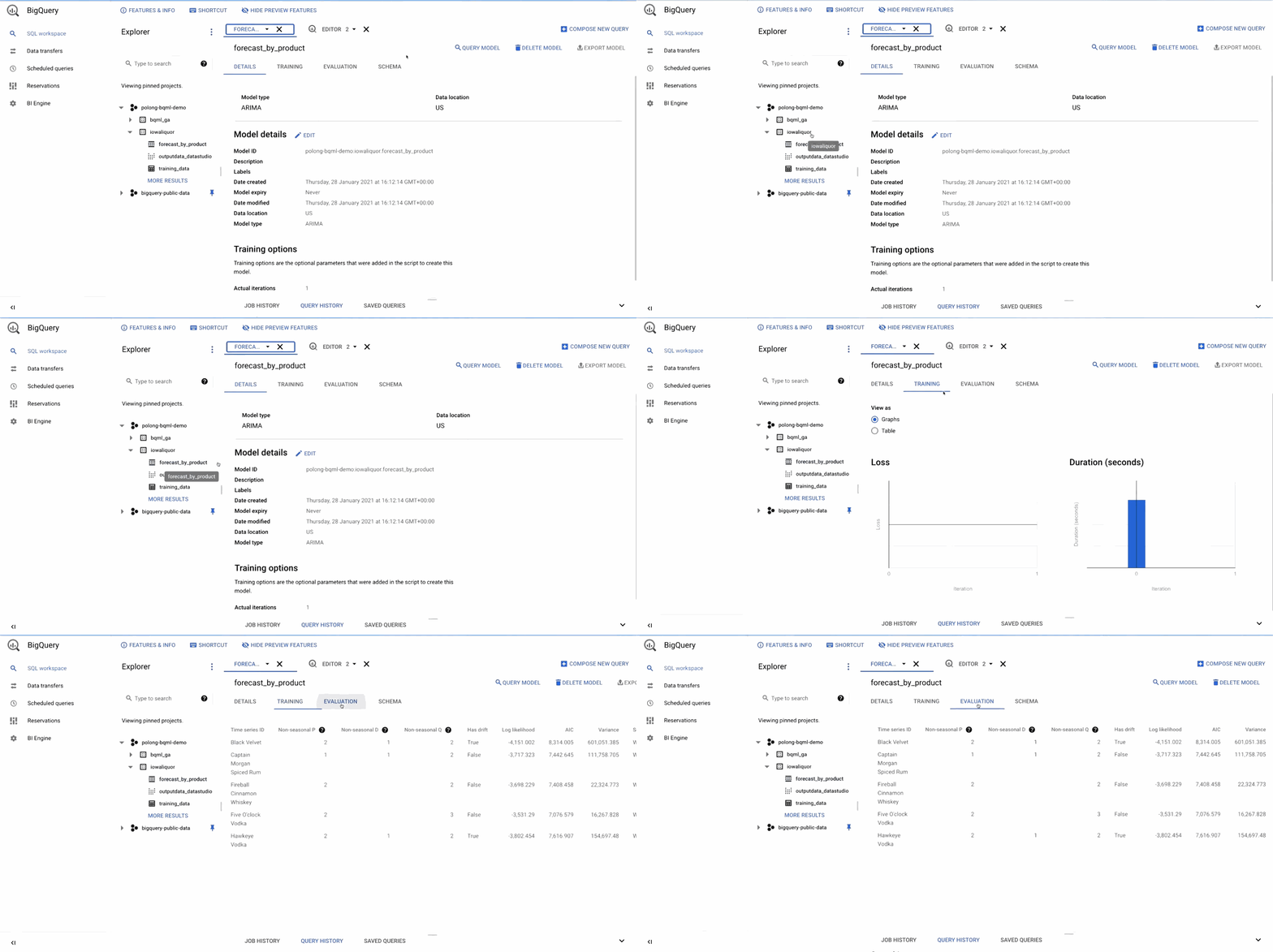
Case Study: Optimizing a Retail Supply Chain
A major retail chain managed inventory across hundreds of stores in varied regions. The chain faced two main issues:
- Overstocking increased storage costs and spoilage.
- Understocking caused stockouts and lowered customer satisfaction.
Traditional forecasting models failed to capture complex factors. These factors included seasonality, regional demand shifts, and promotional activity.
The company deployed BigQuery ML to build a demand forecasting model.
The team analyzed historical sales data and external variables. This analysis achieved the following results:
- Reduced inventory holding costs by 20%.
- Generated annual savings in the millions.
- Aligned inventory levels with predicted demand to reduce overstock.
- Decreased stockouts by 15%.
- Improved product availability on shelves.
- Increased customer satisfaction scores.
- • Real-time updates to demand forecasts allowed the company to adapt to changing market conditions. The solution responded to unexpected weather patterns and emerging regional trends.
- BigQuery ML fully managed infrastructure allowed the solution to scale. The system expanded to new regions and added new product lines without additional management.
Conclusion
- BigQuery ML supports data-driven decisions for inventory and supply chain optimization.
- The solution improves efficiency, reduces costs, and enhances customer satisfaction.
- Begin exploring BigQuery ML to improve supply chain operations.
- Explore GCP data engineering services to build a scalable demand forecasting system.