
Businesses rely on data for decisions. Google Cloud Platform (GCP) manages complex data workflows. GCP provides services to build, process, and analyze large datasets.
GCP offers flexibility and scalability. These features optimize data infrastructure. Engineers avoid manual scaling and maintenance tasks.
This article lists five benefits of GCP for data engineering. It covers process streamlining, security, and real-time data insights. The five benefits are scalability and flexibility, fully managed services, advanced analytics and machine learning, security and compliance, and real-time data processing.
GCP simplifies data infrastructure scaling. Engineers build workflows without managing capacity.
Google Cloud Platform (GCP) provides tools for data engineering projects of all sizes. It supports small datasets and large-scale pipelines. The platform offers flexible, scalable solutions. Businesses build robust workflows without maintaining infrastructure.
The following table lists five benefits of using GCP. It details improvements in scalability, operational overhead, and analytics. It also covers security and real-time processing.
| Key Benefit | Description | GCP Tools/Features | Unique Advantages |
|---|---|---|---|
| Scalability & Flexibility | GCP provides scalable infrastructure that adjusts automatically based on workloads, ensuring optimal performance without manual intervention. | - BigQuery- Dataflow | - Dynamic scaling based on needs- Pay-as-you-go pricing for cost efficiency- Adaptability for both small and large projects |
| Fully Managed Services | With GCP’s fully managed services, data engineers can focus on building pipelines rather than maintaining infrastructure. | - BigQuery (Serverless data warehouse) - Cloud Dataflow (Batch/stream processing) - Cloud Composer (Workflow orchestration) | -Reduced operational overhead - Faster project timelines |
| Advanced Analytics & Machine Learning | Seamless integration with advanced analytics and machine learning, allowing for real-time predictions and deeper insights directly from data pipelines. | - AI Platform (End-to-end ML lifecycle) - BigQuery ML (ML models using SQL) - TensorFlow & AutoML (Custom ML models) | - Built-in AI & ML capabilities - Simplified model training and deployment - Predictive analytics with minimal expertise required |
| Security & Compliance | GCP offers encryption by default and fine-grained access control, ensuring your data stays secure and compliant with industry regulations. | - IAM (Identity and Access Management) - Encryption at rest & in transit - Compliance with GDPR, HIPAA, SOC, and ISO standards | - Enhanced security for sensitive data - Adheres to global compliance standards - Ensures data integrity for highly regulated industries |
| Real-Time data Processing | GCP excels in real-time data processing, allowing businesses to react to changes instantly and make faster, data-driven decisions. | -Cloud Pub/Sub (Real-time event-driven systems) - Cloud Dataflow (Real-time stream processing) - BigQuery Streaming (Real-time data ingestion) | - Low-latency data processing- High-throughput messaging- Continuous, real-time insights in analytics dashboards |
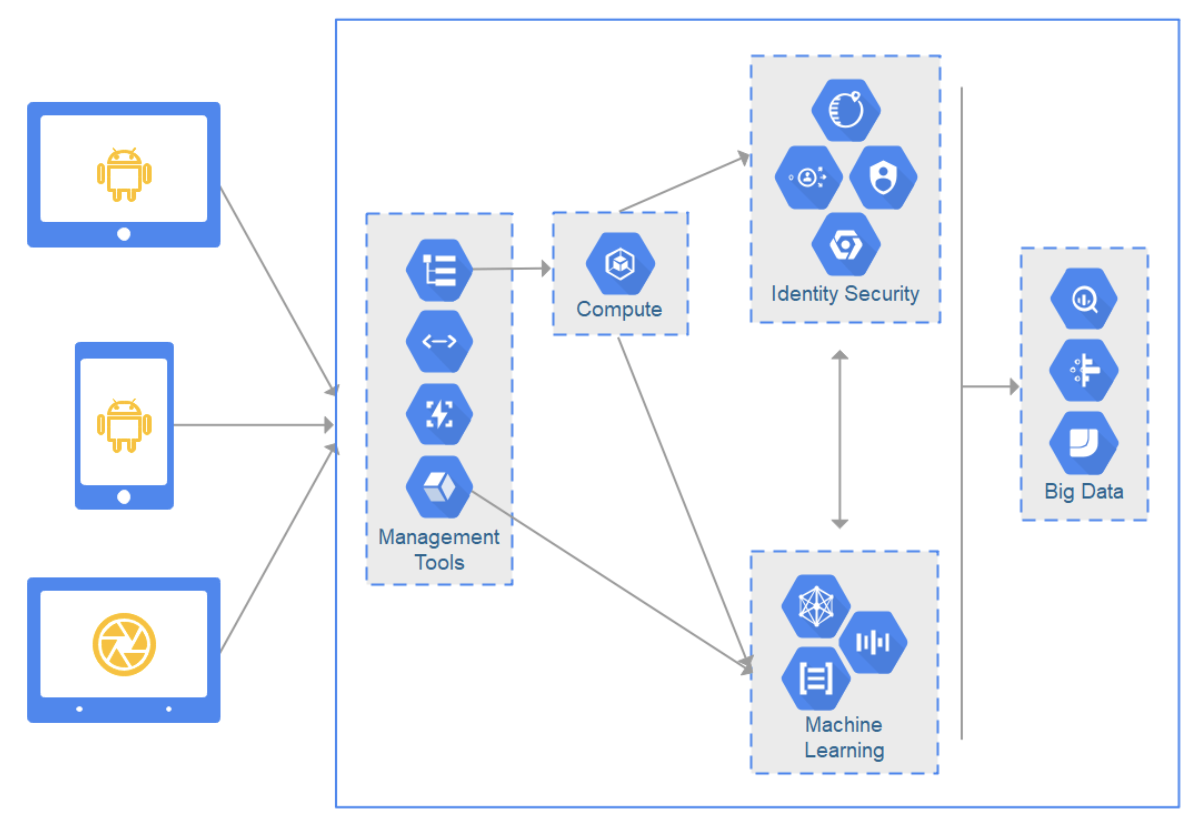
GCP provides scalable infrastructure, managed services, and analytics integration. It suits data engineering projects. Data engineers use these tools to simplify workflows and reduce costs.
Review upcoming weekly posts. Topics include data engineering, tools, techniques, and career guidance.
For help applying these tools on Google Cloud, see our data engineering services.
Related reading: why BigQuery works as an enterprise data warehouse and Google Cloud Storage for data engineers and how to set up a data pipeline on GCP.